
Summer brings changes in routine, increased travel and more time spent outdoors. It also brings a predictable rise in preventable injuries.
The period between Memorial Day and Labor Day has traditionally been referred to as the “100 deadliest days” because of the increase in fatal teen driving crashes during the summer months. Today, many safety organizations are working to reframe that message as the 100 Safest Days of Summer, encouraging families to take simple steps to prevent injuries and stay safe.
While teen driving remains an important focus, emergency departments often see increases in many types of preventable injuries during the summer, particularly among children and teens. By understanding common risks and following practical summer safety tips, families can help make the season healthier and safer for everyone.
This article shares:
- Summer safety tips for families based on common patterns seen in emergency care
- Why injuries tend to increase during warm weather months
- How families can recognize and prevent everyday injury risks across different environments
Why Summer Injury Risk Increases
Summer changes how families spend their time. Children and teens are often outside more, traveling more, staying active later into the evening and spending more time around water, roads, sports equipment and recreational vehicles. At the same time, routines and supervision may become less consistent.
Heat and fatigue can also affect judgment and reaction time. A child who seems irritable, tired or clumsy may actually be overheated or dehydrated.
From an emergency medicine perspective, the issue is not one specific danger. It is the combination of increased activity, increased independence and increased exposure to risk across many everyday environments.
8 Common Summer Injury Risks Families Should Know
1. Teen Driving Safety
Teen driving is one of the clearest examples of summer risk. When school is out, teens often drive more frequently, for longer distances and with less structure. They may travel for jobs, sports, social events or vacations. That added independence increases crash risk, especially with passengers in the car.
Distraction is a major factor. Phones, GPS directions, music and conversations all compete for attention. Summer also brings more nighttime driving, unfamiliar routes and fatigue from work or social plans. Rural roads and low-light conditions add additional risk.
Parents play an important role in helping teens build safe driving habits. Graduated Driver Licensing (GDL) laws are designed to reduce crash risk by limiting higher-risk situations for new drivers, such as nighttime driving and carrying multiple teen passengers. Families should understand and follow the restrictions that apply to their teen driver and consider keeping some of those limits in place even after they are no longer required.
Summer Safety Tips for Teen Driving:
- Limit teen passengers, especially for new or inexperienced drivers
- Enforce a strict no-phone rule, including texting, music apps and GPS adjustments while driving
- Set clear curfews for nighttime driving, when fatigue and visibility risks increase
- Encourage route planning before departure to reduce in-car distractions
- Remind teens to avoid driving when tired, such as after work, sports or social events
- Reinforce seat belt use for every passenger on every trip
2. Water Safety
Water and swim safety is an important one. Water injuries are fast, silent and often happen when adults believe everything is under control. Drowning is a leading cause of death for children. It can occur in seconds without shouting or splashing. Strong swimmers are not immune, and risk exists in pools, lakes, rivers and oceans.
Each environment carries different hazards.
- Pools often involve distractions during gatherings.
- Lakes may have poor visibility and drop-offs.
- Oceans introduce currents and changing conditions.
Flotation devices can provide support but are not substitutes for supervision. A common risk is “diffused responsibility,” when multiple adults assume someone else is watching the child. Even beach play, such as digging deep sand holes, can become dangerous.
Practical Tips for Water Safety:
- Always swim in a lifeguard-designated area
- Assign an active “water watcher”
- Keep young children within arm’s reach
- Use Coast Guard–approved life jackets when appropriate
- Establish water rules before swimming
- Never assume supervision is being actively provided
- Avoid alcohol around water and boating
3. Heat Illness, Vehicle Heat and Sun Exposure
Heat illness can develop quickly during sports, camps and outdoor activities. Dehydration may present as irritability, headache, dizziness, nausea or unusual fatigue. Children can become overheated faster than adults, especially during vigorous activity or prolonged time in the sun.
Hot cars are especially dangerous. A child left in a vehicle — even briefly — can reach life-threatening temperatures quickly. Contrary to popular belief, these incidents do not occur only when a child is intentionally left behind. Changes in routine, distractions and busy schedules can lead to a child being unintentionally forgotten in the back seat. That’s why many safety experts recommend creating reminders and making it a habit to check the back seat every time you leave the vehicle.
Vehicle-related dangers can extend beyond heat exposure. Hot car seats and seat belt buckles can cause burns, and young children may be difficult for drivers to see in driveways and parking lots. As families spend more time traveling during the summer, vehicle safety should remain a priority even when the car is parked.
Other heat-related risks include burns from artificial turf and playground surfaces, as well as stroller overheating caused by reduced airflow. Some medications can also increase sensitivity to heat and sun exposure.
Summer Safety Tips for Heat Exposure:
- Offer water regularly throughout the day
- Schedule outdoor activity earlier or later in the day
- Check car seats, seat belt buckles and playground surfaces before use
- Never leave a child in a parked vehicle, even for a short errand
- Place a needed item in the back seat as a reminder to check before exiting
- Lock parked vehicles and keep keys out of children’s reach
- Make it a habit to “look before you lock”
Additional Resources
- Kids and Car Safety — Information on preventing hot car tragedies, backover incidents and other vehicle-related child safety risks.
- NHTSA Heatstroke Prevention Resources — Safety tips and educational materials for families.
4. Bike, Scooter and E-Bike Safety
Many injuries occur close to home such as driveways, sidewalks and nearby intersections are common sites. E-bikes can reach higher speeds than expected, increasing injury risk.
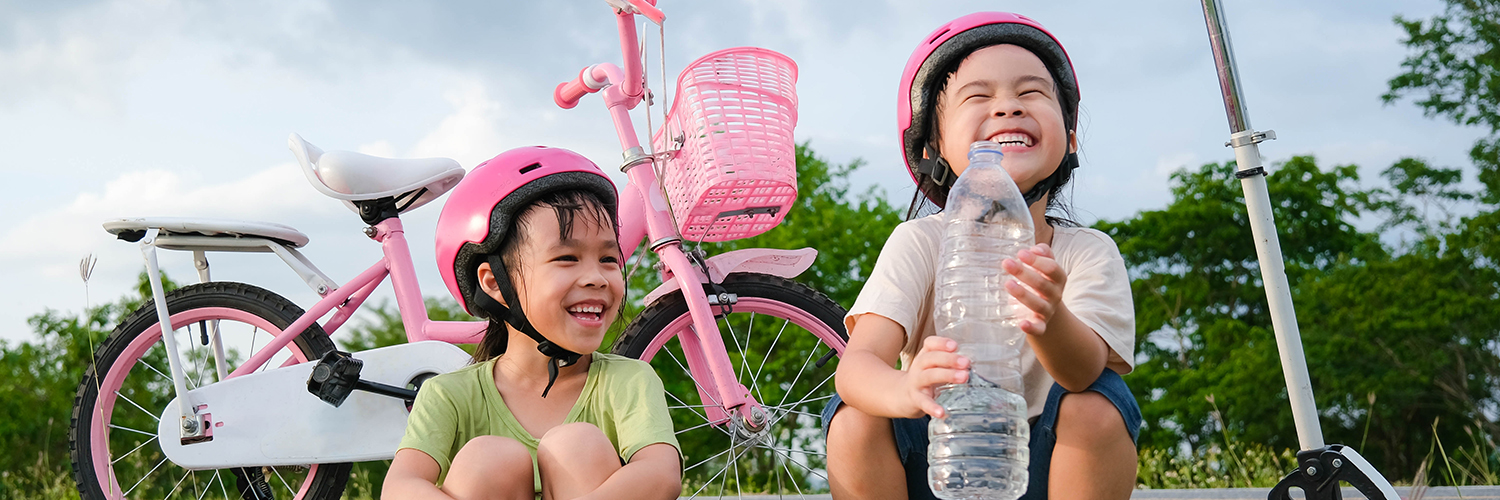
Helmet use remains one of the most effective prevention tools. Visibility is also critical, especially at dusk or after dark.
Battery safety is another overlooked issue. Improper charging or damaged batteries can overheat and cause fires.
Practical Tips for Bike Safety:
- Make helmet use non-negotiable
- Review intersections and driveway safety rules
- Use lights and reflective gear at night
- Follow proper charging guidelines for e-bikes
- No riders under the age of 16
- Prohibit the use of earbuds, cellphones or any other electronics that could distract
5. Recreational, Backyard and Home Injuries
Familiar environments are a common setting for serious injuries. Trampolines, sports, playgrounds and motorized toys can all cause fractures, sprains and head injuries. Concussions may be subtle and easily missed.
Window falls are also a seasonal risk when homes are opened for airflow. Screens are not fall protection. Lawn equipment can cause severe injuries, and yard work may produce flying debris.
Dog bites also increase during summer when children interact more frequently with animals in social settings.
Practical Tips for Home Safety:
- Limit trampoline use and avoid multiple jumpers
- Supervise ride-on and motorized toys
- Use window safety locks where appropriate
- Keep children away from active yard equipment
- Teach safe behavior around dogs
6. Fireworks Safety
Fireworks cause burns, eye injuries and hand injuries every summer. Sparklers burn at extremely high temperatures and are often underestimated.
Spectator injuries also occur. Fireworks that appear inactive may still ignite unexpectedly.
Summer Safety Tips for Using Fireworks:
- Attend professional displays when possible
- Keep children away from consumer fireworks
- Never allow young children to use sparklers unsupervised
- Maintain distance from active or recently used fireworks
- Seek care immediately for eye injuries or burns
7. Grilling, Fire Pits and Outdoor Gatherings
Outdoor gatherings often reduce attention to safety. Grills and fire pits remain hot long after use. Children may wander into unsafe areas during busy social moments.
Food safety also matters during outdoor gatherings. Perishable foods left out too long in the heat can increase the risk of foodborne illness. Refrigerate food promptly, since bacteria can grow quickly when food is left out at room temperature or in the temperature range where they multiply fastest (about 40°F to 140°F). As a general rule, perishable foods should not sit out for more than 2 hours, or more than 1 hour if the temperature is above 90°F.
Summer Safety Tips for Grilling:
- Create a child-free zone around heat sources
- Refrigerate food promptly
- Keep cords and drinks away from play areas
- Assign supervision during gatherings
8. Bug Bites, Poisonings and Environmental Exposures
Summer exposures include ticks, mosquitoes, plants and household chemicals. These risks are often easy to overlook because they happen during normal outdoor play and everyday activities.
Tick bites are especially important to watch for in warmer months because ticks can spread illnesses such as Lyme disease. Often found in wooded areas, tall grass, leaf piles and even backyard spaces, ticks can be very small, and bites may go unnoticed without regular skin checks after outdoor activity.
Children may also accidentally touch or ingest harmful plants, berries, mushrooms or chemicals while playing outside. Pool chemicals and pesticides can be especially dangerous if improperly stored.
Heat can also damage everyday products like sunscreen and medication when they are left in hot cars, garages, or bags for long periods of time.
Summer Safety Tips for Bug Bites and Environmental Exposures:
- Use EPA-approved insect repellent and check for ticks after outdoor time (hairline, behind ears, armpits, behind knees)
- Store chemicals and pool supplies in locked cabinets, never in food containers
- Teach children not to eat or touch unknown plants, berries or mushrooms
- Discard sunscreen or medications left in excessive heat
- Call Poison Control immediately for any suspected exposure
What Families Should Remember
Most summer injuries are predictable — and therefore preventable. Small actions like supervision, helmets, back-seat checks and heat awareness can make a meaningful difference.
Summer should still be enjoyable. The goal is not fear but awareness and prevention.