


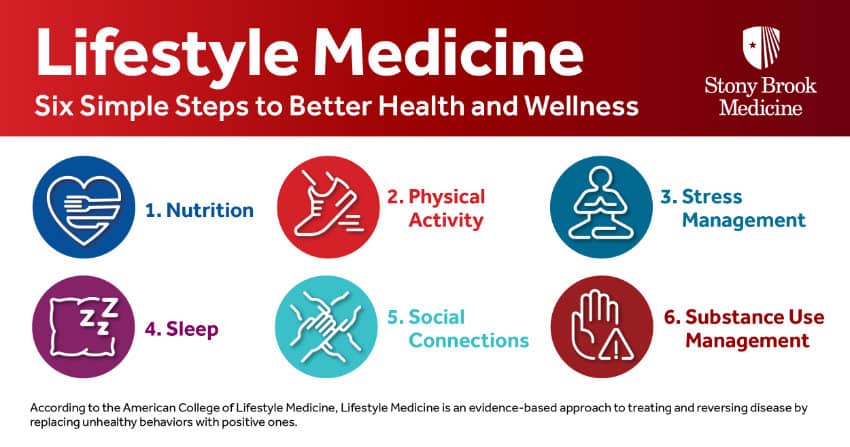
Lifestyle Medicine is a powerful, evidence-based approach to preventing, treating and even reversing many chronic diseases that affect millions of Americans today.
This approach focuses on six key behaviors—called “pillars”—including eating a predominantly whole-food, plant-based diet, engaging in physical activity, getting restorative sleep, practicing stress management, avoiding risky substances and building strong social connections.
Research shows that adopting these habits can dramatically reduce the risk of most chronic diseases, including heart disease, diabetes, obesity, cancer, dementia and depression.
The 6 Pillars of Lifestyle Medicine
1. Food and Nourishment
For tens of thousands of years, humans ate small meals made up of unprocessed foods and very little sweets. Our physiology adapted to relative scarcity—until the turn of the last century when mass production and the processing of food became commonplace.
A cornerstone of lifestyle medicine is going back to our roots and eating a predominantly whole-food, plant-based diet. Eating a healthy diet doesn’t necessarily mean becoming vegetarian or vegan—it means centering your meals around fruits, vegetables, whole grains, legumes, nuts and seeds while minimizing ultra-processed foods and excess animal products (eliminating processed meats, sweet beverages, minimizing red meat and fatty meals).
Why a healthy, balanced diet matters:
- Reduces inflammation linked to heart disease, diabetes and cancer
- Supports a healthy gut microbiome, which plays a role in immunity and mood
- Improves energy levels and long-term weight management
Tips for getting started:
- Swap out processed snacks for fresh fruits or veggies, which you can dip with a little hummus as it is high in good fat.
- Avoid sugary beverages and drink plain water instead. If you don’t like plain water, add flavor with lemon, mint or just a couple of tablespoons of your favorite fruit juice.
- Prep simple meals ahead of time using whole ingredients, aiming to fill half your plate with non-starchy vegetables and fruits.
- Try “Meatless Mondays” or plant-forward meals a few times a week to reduce your meat consumption. Think of eventually eating one plant-based meal a day, so a meal based on lentils, beans, or nuts and seeds. Meal ideas include lentil soup, vegetarian chili, salad with chickpeas, or salads with seeds and walnuts.
2. Movement
Movement is essential to life. The more we move, the better our health.
Physical activity is any movement that you engage in throughout the day. Exercise is planned, structured, intentional movement intended to improve or maintain physical fitness. Movement is one of the most accessible and powerful tools for improving overall health. It helps prevent chronic conditions, boosts mental health and strengthens your body at every level.
Barriers to starting an exercise routine, like time, motivation or joint pain, are real—but so are the solutions. Any amount of physical activity is beneficial, whether it’s 30 minutes or 30 seconds. Start small, build consistency and choose activities you enjoy doing to stay consistent.
The goal:
- 150 minutes of moderate-intensity activity per week (such as brisk walking, dancing, cycling or swimming)
- Or 75 minutes of vigorous activity per week (like running or high-intensity workouts)
- Plus 2 days of muscle-strengthening activities each week (such as lifting weights or doing body weight exercises)
- Older adults should also add balance training for fall prevention
Easy ways to get moving:
- Get up and move your body every 30 minutes, even if you’re simply walking to the bathroom or preparing a meal
- Take a 10 or 20-minute walk after meals. Walking after each meal will help to lower your blood sugar.
- Ride a bike or walk to your destination instead of driving short distances
- Try free online yoga or bodyweight workouts at home
- Join a local sports team, gym, exercise group or fitness studio (which your insurance may even cover). Medicare advantage provides silver sneakers benefits for gym and online memberships, too.
3. Good Sleep
Getting enough sleep is crucial for healing, resilience and overall health—both physically and mentally. Yet, many adults fall short of the recommended 7-9 hours of sleep per night.
When sleep suffers, so does nearly every other aspect of your health, such as your mood, metabolism and food choices. Non-refreshing and not enough sleep can affect your cardiovascular health, worsen diabetes and contribute to depression and pain. Making restorative sleep a priority can have an immediate impact on how you feel and your general well-being.
Signs of poor sleep can include:
- Difficulty concentrating or completing tasks
- Mood changes or irritability
- Frequent illness or low immunity
- Cravings for unhealthy foods, such as sugary snacks and refined grains
Tips for better sleep hygiene:
- Stick to a consistent sleep-wake schedule, even on weekends
- Avoid screens and large meals before bed
- Avoid drinking caffeinated drinks after lunch and alcohol before bedtime
- Create a relaxing bedtime routine (such as reading, stretching, taking a bath or doing deep breathing). Avoid electronics for one hour before bed.
- Get sunlight exposure in the morning and exercise during the day to support a healthy circadian rhythm
- Don’t go to bed hungry. You can have a healthy, starchy snack such as a brown rice cake, apple or sweet potato, which will increase your serotonin levels.
4. Relaxation and Nonjudgemental Awareness
Chronic stress affects the brain, heart, hormones, and digestive and immune systems. Over time, unmanaged stress can contribute to anxiety, pain, cardiovascular and digestive, poor sleep, diabetes and other health issues.
Building small daily rituals for mental wellness can lower stress levels and promote emotional balance.
Tools for reducing stress:
- Mindfulness and meditation (even 5-15 minutes per day can help)
- Breathwork or guided imagery exercises
- Journaling and reading
- Nature walks or hobbies that bring you joy and relaxation
- Tai chi routines
- Socializing and building meaningful relationships
5. Healthy Patterns of Behavior
While habits help us function efficiently, it’s important to regularly reflect on whether our routines are truly supporting our well-being. Sometimes, we fall into automatic behaviors that harm our health, like constantly checking our phones, sitting too much, overeating or relying on substances like alcohol or cigarettes.
These habits often happen without us even thinking, making them hard to break. But change is possible with awareness, support and the right conditions.
What helps build healthy habits:
- Start with gentle awareness. Notice your habits without harsh judgment
- Set small, realistic goals. One small step at a time is more sustainable than a total overhaul
- Replace, don’t just remove. Instead of cutting out a habit completely, replace it with a healthier one (like swapping evening scrolling for a short walk)
- Surround yourself with people, spaces and routines that make healthy choices easier
- Focus on your sense of purpose, which will keep you motivated and at peace
- Seek help if needed. Therapy, support groups or community programs can be essential when patterns are deeply ingrained
What to watch out for:
- Avoid aiming for perfection. Slipping up is normal, so don’t let it stop your progress
- Don’t rely on willpower alone. Structure your environment to support your goals
- Be mindful of stress triggers and find healthier ways to address them
6. Caring Social Connections
Humans are wired for connection. Strong relationships with family, friends and community are associated with longer lifespans, reduced risk of depression, and even lower rates of chronic illness. Even having one or two close relationships can help you cope with stress and contribute to better health.
The risks of social isolation:
- Increased risk of heart disease and dementia
- Higher levels of anxiety and depression
- Poorer immune function
Ways to nurture meaningful connection:
- Reach out to friends, family and neighbors regularly to catch up and schedule meet-ups
- Make time for shared activities like cooking, walking or playing games
- Call or video chat with loved ones regularly if you can’t see them in person
- Join a local interest group, faith community or volunteer organization
Start Building a Healthier Future Today
Lifestyle medicine is not about perfection—it’s about progress. Every small choice adds up, and together, the six pillars offer a roadmap for long-term, sustainable health.
Ready to take the next step? First, assess your habits: Which pillar could you improve today? Make one change at a time, and build from there.
At Stony Brook Medicine, we’re committed to helping our community optimize their health through lifestyle changes—one step, one meal and one movement at a time. For personalized support on your journey to better health, schedule a visit with a Stony Brook Lifestyle Medicine provider. Our team can help you create a wellness plan tailored to your unique needs and goals. Learn more and request an appointment here or call 631-689-8333.