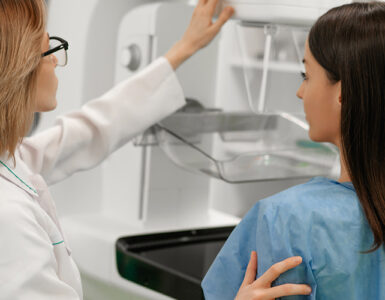


Breast cancer screening is an essential way to care for yourself and protect your health. Early detection can offer reassurance and open doors to more treatment options if needed.
With imaging techniques like mammography, for example, breast changes can be identified years before physical symptoms develop, significantly improving breast cancer outcomes and survival rates.
By prioritizing regular screenings, you are making a powerful choice to protect your health and ensure early detection when it matters most.
What is Breast Cancer Screening?
Breast cancer screening involves checking a woman’s breasts for cancer before signs or symptoms of the disease become apparent. The primary goal is to detect cancer at its earliest and most treatable stages.
Breast Cancer Screening Methods
- Mammography: Mammography is currently the gold standard screening test for breast cancer. This method uses digital x-ray images of the breast to reveal tumors that cannot be felt. Mammography is widely available and is proven to reduce the death rate from breast cancer by detecting the disease early. At Stony Brook Medicine, we use the most advanced, 3D mammography equipment aided by artificial intelligence.
- Breast MRI: Breast MRI uses magnets and radio waves to take pictures of the breast. It’s recommended for women at high-risk for developing breast cancer because it provides highly detailed images that can detect abnormalities that are not apparent on mammograms.
- Ultrasound: Ultrasound is typically used for screening women with dense breast tissue or for further evaluation of clinical breast symptoms or suspicious mammographic findings.
A healthcare provider can also perform a clinical breast exam using their hands to feel for lumps or other changes in the breast or underarm (armpit). You can do the same by performing a self-exam to check for lumps, pain or a difference in breast size. Clinical breast exam is less accurate and less sensitive than imaging and should not replace annual screening mammograms.
Current Breast Cancer Screening Guidelines
Breast cancer screening guidelines are based on rigorous scientific research and population data. They aim to balance the benefits of early cancer detection with the risks of overdiagnosis and overtreatment.
Adhering to these guidelines can lead to earlier detection of breast cancer, which is associated with better prognosis and less aggressive treatments.
According to guidelines from the American College of Radiology and the U.S. Preventive Services Task Force, all women should begin annual mammography screenings at age 40.
Guidelines for Women at Higher Risk for Breast Cancer
Women with a lifetime risk of breast cancer of 20 percent or higher should consider earlier screening and supplemental screening tests like breast MRI and ultrasound:
- family history of breast cancers, especially in first degree relatives
- Personal history of breast cancers or precancerous diagnoses like atypia
- Those with known genetic mutations such as BRCA1 or BRCA2 genetic mutations
- Those who have had previous radiation therapy of the chest before the age of 30
- Those of Black/African American or Ashkenazi Jewish descent (who should have testing done at age 25 to determine if they are at a higher risk)
It’s important for women with a higher risk for breast cancer to consult with their healthcare providers to tailor a screening plan based on their medical history and specific risk factors.
Why and How is a Mammogram Performed?
A mammogram is performed by a radiologic technologist at a location such as a medical clinic, hospital, healthcare provider’s offices or imaging center.
The test typically takes about 30 minutes and is performed on an outpatient basis, meaning you have the test done in an office setting and can then go home or continue your normal day-to-day activities afterward.
Having a mammogram performed involves the following steps:
- The breast is placed on a special platform and compressed with a paddle to flatten the tissue. This helps create the clearest possible images.
- Multiple digital images are taken of the breast from different angles. The images are then reviewed by a radiologist to identify any abnormalities, some of which may potentially be cancerous.
- You can expect to receive your mammogram results within a few days to a week, depending on the facility. If any abnormalities are found, your healthcare provider will contact you to discuss next steps, which may include additional diagnostic imaging or biopsy.
Tips for a Smooth Mammogram Experience
In order to get the most accurate results from a mammogram, follow these steps:
- Schedule your mammogram when your breasts are least likely to be tender and avoid the week before your period.
- Avoid deodorants or antiperspirants on the day of the exam since they can appear as white spots in the images.
- Wear comfortable clothing, preferably a two-piece outfit, so you only need to remove your top and bra.
For those seeking more detailed information about breast cancer screening or needing specific guidance based on personal or family history, visit Stony Brook Cancer Center for help. Radiologists are specialized physicians in the Carol M. Baldwin Breast Care Center who provide multidisciplinary care for breast cancer and other conditions of the breast. Care begins with diagnostic testing and evaluation using state-of-the-art diagnostic technologies and proceeds to advanced, coordinated treatments. Learn more about our services by calling (631) 638-2121.