


Electric bikes and scooters are more popular than ever. Your teenager might be begging for one to get to school, visit friends or just ride around the neighborhood. But before you make that purchase, we need to talk about safety.
At Stony Brook Children’s Hospital Pediatric Trauma Center, we are seeing a significant and alarming increase in children injured while riding e-bikes and e-scooters. These “micromobility devices” might look like harmless upgrades to traditional bicycles, but they carry serious risks. Injuries from motorized bikes and scooters are often much more severe than from regular bikes.
If you are considering an e-bike or e-scooter for your child, here is what you need to know to keep them out of the emergency department.
Why Micromobility Devices Are a Growing Concern
National and local data show that e-bikes and e-scooters are becoming a major source of child and teen trauma. Children under 15 account for more than one-third of all e-bike and e-scooter injuries nationwide, despite making up a much smaller share of the population.
Here at Stony Brook Children’s, the data paints a clear picture:
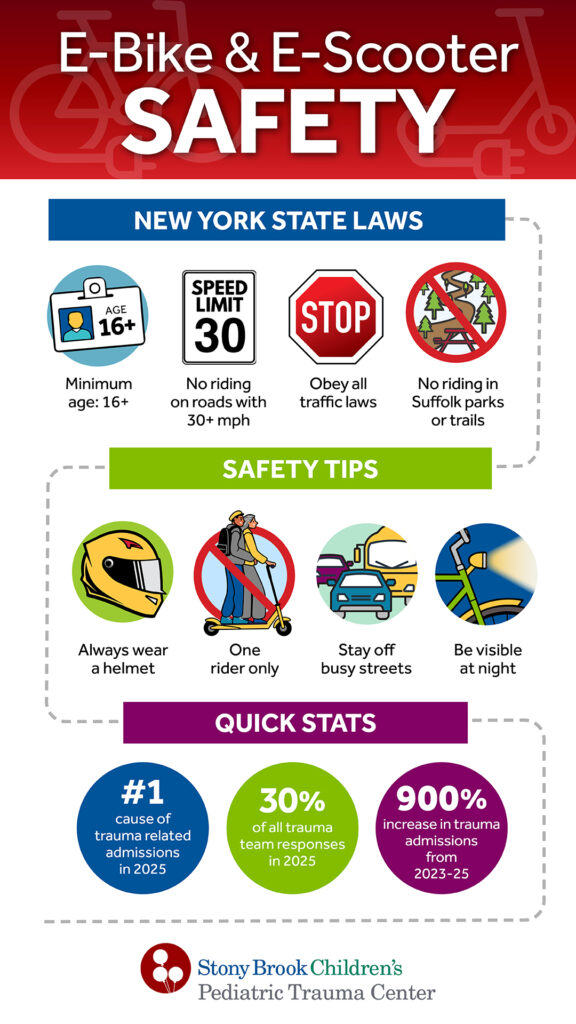
- Micromobility-related hospital admissions increased by more than 2,200 percent between 2023 and 2025.
- In 2025, these devices accounted for 30 percent of all pediatric trauma emergency responses.
- These accidents recently surpassed all other injuries to become our number one cause of injury for trauma-related admissions.
High Speeds
Why are these injuries so serious? It comes down to speed and power.
Unlike a traditional bicycle powered by pedaling, e-bikes and e-scooters can easily reach speeds of up to 25 mph. When a child crashes at these high speeds, the trauma is significant. Pediatric e-bike crashes are far more likely to result in severe head injuries, internal injuries and prolonged hospital stays.
Low Helmet Use
Adding to the danger is a widespread lack of protection. National studies consistently show low helmet use among riders of motorized devices. When riders skip the helmet at 25 mph, they leave themselves at a high risk for preventable, life-altering head injuries.
Know the Law Before They Ride
Safety starts with understanding the rules. Many parents assume that if a device looks like a bicycle, it’s treated like one. However, the laws are very different for motorized devices.
- Age Requirements: In New York State, riders must be at least 16 years old to operate an e-bike or e-scooter. Children under 16 should never operate these devices.
- Traffic Rules: Riders must adhere to all traffic laws of the road. E-bikes and e-scooters cannot be operated on roads with speed limits greater than 30 mph.
- Not All Devices Are Equal: Some devices marketed simply as “e-bikes” are actually limited-use motorcycles. These may require registration and could be completely illegal for your teen to operate.
- School Bans: Many schools and districts have banned the use of e-bikes and e-scooters on their campuses. These bans protect both the riders and the pedestrians walking to school.
7 Essential E-Bike Safety Guidelines
If you decide your teenager is old enough and responsible enough to ride an e-bike or e-scooter, strict ground rules are non-negotiable.
Share these essential safety tips with your teen:
- Wear a Helmet Every Ride: A properly fitted helmet can reduce the risk of a serious head injury by up to 85 percent. However, a standard bicycle helmet is only approved for speeds up to 14 mph. Since e-bikes go much faster, you must use a helmet rated for higher speeds and motorized riding. Look for helmets specifically certified for e-bikes or motorcycles.
- Follow the Age Laws: Do not let younger siblings take a turn. The 16-and-older rule exists because younger children simply do not have the motor skills, reaction times or traffic awareness to handle high-speed motorized devices.
- Slow Down: Higher speeds are directly associated with an increased risk of severe injury. Encourage your teen to keep their speed well below the maximum limit.
- No Passengers Allowed: These devices are built for a single rider. Adding a passenger completely changes the balance and braking ability of the bike.
- Ride in Safe Areas: Teens should avoid busy roads and heavy intersections. Stick to approved bike lanes and quiet neighborhood streets.
- Put Away the Electronics: Distracted riding is just as dangerous as distracted driving. There should be absolutely no cell phone use, and earbuds should never be worn while riding. Riders need all their senses to stay safe.
- Stay Visible: Daytime riding is always safer. If riding at night is unavoidable, the law requires front and back brake lights. Wear bright, reflective clothing to ensure drivers can see the bike from a distance.
Consider Safer Alternatives
As parents, we want our kids to have fun and be independent. But you don’t have to buy an e-bike to make that happen. Traditional, non-motorized bicycles and scooters are always a safer option.
Pedal-powered bikes give kids great exercise, teach them the rules of the road at a manageable speed and dramatically lower their risk of severe trauma. If your child is under 16, a traditional bicycle is the best choice for their safety and your peace of mind.
We Are Here to Help
Keeping your family safe is our top priority. For more resources on helmet safety, injury prevention and keeping your kids safe on the road, reach out to the Stony Brook Children’s Pediatric Trauma Center and our Injury Prevention Program. We offer educational materials, guidance and support to help you make the best choices for your child’s health and safety.