

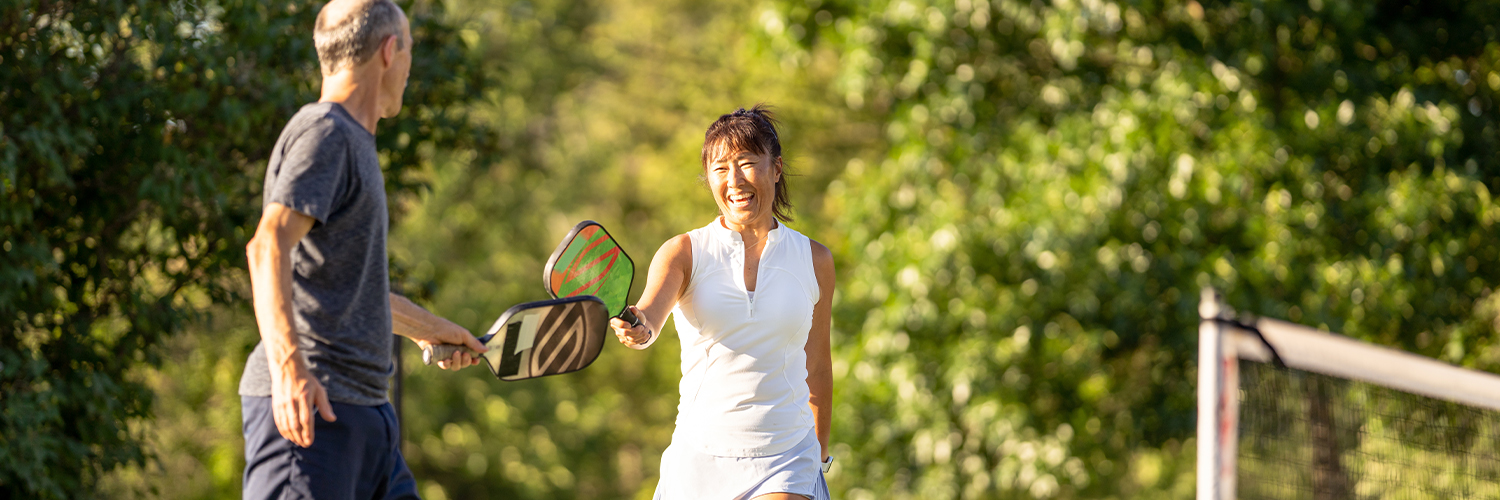
Recreational and team sports aren’t just for kids. Every year, millions of adults lace up their sneakers for pickup basketball, tennis matches, weekend soccer or local leagues—and for good reason, considering it’s fun, social and great exercise.
But with age, our bodies don’t recover like they used to. That’s why middle-aged and older adults can be likely to experience sports-related injuries, especially when jumping into high-intensity activity or starting an exercise routine without preparation.
If you’re jumping back into sports or keeping up your game well into your 50s, taking time to prepare your body can go a long way in preventing injuries and allowing you to stay active.
Common Sports Injuries in Adults
Sports-related injuries are those that affect the musculoskeletal system, which is the network of muscles, tendons, ligaments, bones and other tissues that allow for movement and provide stability.
Most injuries in adult athletes happen because of overtraining, overuse, lack of warm-up, or sudden movement that strains the muscles and joints. Not wearing proper equipment and being active with an existing injury are also risky.
Here are the most common injuries seen in orthopedic clinics:
1. Ankle Sprains
One misstep on the court or field can overstretch or tear the ligaments that support your ankle, leading to sprains that can take weeks to heal. Ankle injuries are one of the most common among adult athletes and often occur during sports like basketball, pickleball, soccer, skiing and trail running.
Ankle sprains and injuries can include:
- Inversion sprain: The most common type, caused when the foot rolls inward, stretching or tearing the outer ligaments.
- Eversion sprain: Less common but more severe, this happens when the foot rolls outward, affecting the inner ligaments.
- High ankle sprain: Involves the ligaments above the ankle joint and often occurs during sports that involve sudden twisting or cutting movements, like football or basketball. Severe high ankle sprains may require surgery.
- Recurrent sprains: Once you’ve sprained your ankle, you’re more likely to sprain it again.
2. Knee Injuries (Sprains, Meniscus Tears, ACL Injuries)
Knees take a lot of impact during sports that involve jumping, running and quick directional changes, including basketball, racquet sports and soccer. These movements can tear the ligaments in the knees or damage the meniscus, a piece of cartilage that acts as a cushion.
Examples of knee injuries include:
- Fracture: Break in the kneecap or nearby bones from a fall or direct impact.
- Dislocation: The kneecap, or knee joint, shifts out of place after a large force or awkward movement.
- Tendon tear: Seen in middle-aged athletes from explosive jumping or landing.
- Runner’s knee: Pain near or under the kneecap from overuse or improper alignment.
- ACL tear: Common in pivot-heavy sports like soccer; involves sudden stops or direction changes.
- Meniscus tear: Cartilage damage from twisting the knee; can happen with or without ligament injury.
3. Other Leg and Lower Body Injuries
- Achilles Tendonitis or Rupture: The Achilles tendon, which connects the calf muscles to the heel bone, can become inflamed or even rupture from sudden explosive movements like sprinting or jumping. The risk for these types of injuries is higher in sports like football, basketball, tennis and running.
- Hamstring strain: Overstretching the back thigh muscles during sprinting or jumping.
- Shin splints: Inflammation along the shin from repetitive impact, especially in new runners.
- Groin pull: Strain of tendons and muscles in front of the hip during side-to-side motion (such as hockey and soccer).
4. Shoulder Injuries
- Rotator Cuff Injuries: The rotator cuff is a group of muscles and tendons that help stabilize the shoulder. Overuse or awkward falls can lead to tears or impingement, especially in older adults. Tennis, baseball, swimming and overhead strength training can put people at risk for rotator cuff injuries.
- Impingement: The shoulder blade pressure irritates tendons and bursa (fluid-filled sac that cushions joints) with repeated overhead motions.
- Instability: A loose shoulder joint that can dislocate or cause pain due to stretched ligaments.
5. Lower Back Pain
Twisting, lifting or lack of core stability can lead to muscle strains or disc problems in the lower back. This is especially common in athletes who neglect stretching and strengthening exercises.
Golf, rowing, and any sport with sudden twisting or bending can lead to back injuries and pain.
Common types of back injuries can include:
- Muscle or ligament strain: Overstretching from sudden movements or improper lifting can cause painful back strains, especially in the lower back.
- Herniated or bulging disc: Occurs when the soft center of a spinal disc pushes through its outer layer, often pressing on nerves and causing pain, numbness or weakness.
- Sciatica: Compression or irritation of the sciatic nerve, usually from a herniated disc, causing radiating pain down one leg.
- Spinal fractures: Breaks or cracks in the vertebrae from falls, collisions or overuse; more common in older adults or those with osteoporosis.
- Degenerative disc disease: Age-related wear and tear on spinal discs that can lead to chronic back pain and stiffness.
6. Elbow Injuries
Tennis elbow can occur when there’s pain on the outer elbow from overuse, especially in racquet sports or manual work.
Other types of elbow injuries include:
- Golfer’s elbow: Pain on the inner elbow from gripping or wrist movements.
- UCL injury: Torn ligament from repetitive throwing, leading to pain and reduced performance.
Why These Injuries Happen More Often With Age
As we age, our muscles lose elasticity, joints have less cushion and recovery takes longer.
Many adult athletes try to perform at the same level they did in their 20s, but without the same support from their bodies. This mismatch can lead to serious injuries, and unfortunately, it’s usually more difficult to bounce back the older you get.
Other contributing factors to sports injuries in adults include:
- Reduced flexibility and mobility
- Less muscle mass and strength
- Slower reaction times
- Not warming up properly or skipping cooldowns
- Prior injuries that haven’t fully healed
Injury Prevention Tips for Adult Athletes
Use these strategies to help protect against injuries and improve performance:
1. Warm Up Before Every Activity
Spend at least 5-10 minutes warming up with light cardio and dynamic stretches. Focus on movements that mimic your sport, like lateral shuffles for tennis, kicks for soccer, or light jogging and air squats for basketball.
2. Stretch Regularly After Sports and Workouts
Keep your muscles and joints flexible by doing static stretches or yoga after workouts and in between games. Target tight areas like the hip flexors, hamstrings, calves and shoulders.
Helpful stretches for different body parts can include:
- Standing hamstring stretch
- Quad stretches (standing or lying)
- Calf stretches against a wall
- Hip flexor stretch (kneeling lunges)
- Seated forward folds
- Cross-body shoulder stretch
- Chest opener (hands clasped behind back)
- Neck stretch (ear to shoulder in both directions)
3. Strengthen Core and Stabilizer Muscles
Strong core and hip muscles reduce the load on your lower back and knees. Add exercises to your workout routine like:
- Planks and bridges for your core
- Single-leg balance exercises
- Squats and lunges for lower-body strength
4. Wear Proper Footwear
Supportive, activity-appropriate shoes help reduce impact and prevent ankle and knee injuries. Replace worn-out shoes regularly and consider visiting a sports shoe specialist to get measured or an orthopedic for help if you have a history of injuries.
5. Don’t Skip Recovery Days
Give your body time to rest, repair and rebuild. Avoid playing through pain, and rotate between high-impact and low-impact activities like biking, walking, yoga or swimming.
6. Hydrate and Fuel Properly
Dehydration and poor nutrition can increase the risk of muscle cramps and fatigue-related injuries. Drink plenty of water during and after workouts and have a light snack before to avoid feeling dizzy and weak.
Things to Avoid
To stay safe and active, it’s just as important to know what not to do as it is to prepare properly, especially when returning to sports after time off or injury. Avoid:
- Jumping into intense activities or games without warming up
- Playing through pain, numbness or fatigue
- Ignoring small injuries that could worsen over time
- Rushing back into sports after time off or previous injuries
When To See a Doctor
If you experience the symptoms below, it’s time to consult with a sports medicine specialist or orthopedic provider:
- Persistent joint pain
- Swelling that doesn’t go down in a few days
- Loss of motion or weakness
- Pain that worsens with activity
Early treatment can prevent more serious injuries and get you back in the game safely. Stony Brook Medicine Orthopaedic Associates and sports medicine specialists are here to help you recover from injury and stay active at every stage of life.
Whether you’re rehabbing a torn ligament, managing joint pain, or preparing to return to sports after time off, our team offers advanced treatments and personalized care. Learn more and request an appointment here.