
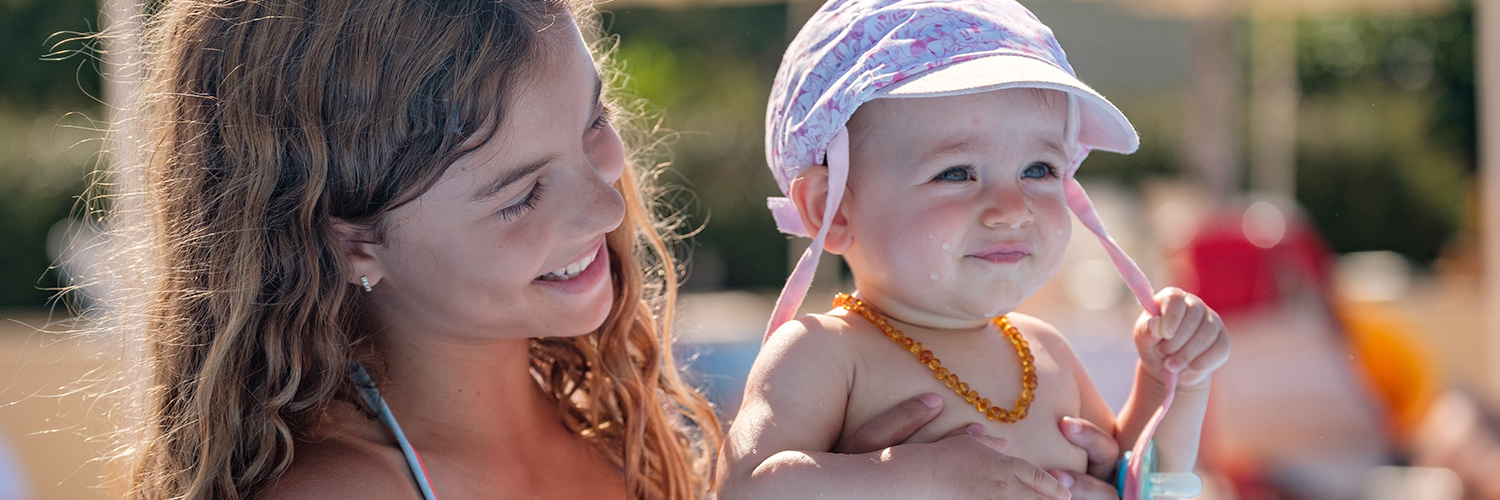
Many parents wonder whether it’s safe to use sunscreen on their babies. Using sunscreen on babies under six months old is generally not recommended. However, protecting a baby’s skin with other safe and effective methods is still very important.
In this article, we’ll explain when sunscreen is safe for babies, the limited situations where it may be used for infants under six months and how to choose the right sunscreen as they grow.
Can You Use Sunscreen on Babies?
Pediatricians and dermatologists, including guidance from the American Academy of Pediatrics, advise against routine sunscreen use on infants under six months. However, sunscreen may be used in small amounts on limited exposed areas, such as the face and backs of the hands, if adequate shade and protective clothing are not available.
Babies under six months have delicate, sensitive skin that is more prone to irritation and allergic reactions. The active ingredients in sunscreen (chemical filters that absorb UV radiation) may not be well tolerated by a baby’s developing skin, leading to potential adverse reactions. Their skin is also thinner and absorbs substances more easily than older children and adults.
Although sunscreen use on young infants is limited, protecting your baby from the sun is still essential. Their fragile skin is more susceptible to UV damage, which can lead to sunburn and increase the risk of skin cancer later in life.
How to Protect Your Baby from the Sun
Besides sunscreen, there are safe and effective ways to shield your baby from harmful UV rays:
- Keep your baby in the shade as much as possible, especially between 10 am and 4 pm, when the sun’s rays are strongest.
- Dress your baby in lightweight, long-sleeved clothing and a wide-brimmed hat to protect their skin and face.
- Check the UV index on your weather app; protection is recommended when the UV index is 3 or higher.
- Be mindful that UV rays can reflect off surfaces like water, sand and pavement — even in the shade. Choose clothing with a UPF (Ultraviolet Protection Factor) label for added sun protection.
- Use a stroller canopy or attach a sunshade when outdoors.
- Set up a beach umbrella or sun tent to create consistent shade.
- Make sure your baby stays hydrated with breast milk or formula.
Monitor your baby for signs of sunburn or dehydration, such as redness, fussiness or excessive crying. Watch for signs of heat stroke, including flushed skin, rapid breathing or unusual sleepiness.
If your baby becomes sunburned, get out of the sun immediately and apply a cool compress. Contact your pediatrician if irritation persists.
Using Sunscreen on Children Older Than Six Months
Once your baby reaches 6 months of age, sunscreen becomes an important part of sun protection. When choosing and using sunscreen, keep these recommendations in mind:
- Choose a broad-spectrum sunscreen that protects against UVA and UVB rays.
- Opt for mineral sunscreens containing zinc oxide or titanium dioxide, which are less likely to irritate sensitive skin and are generally preferred for infants and young children.
- Avoid oxybenzone when possible; some parents choose to limit certain chemical ingredients due to irritation or absorption concerns.
- Look for sunscreens labeled for babies or sensitive skin.
- Choose a sunscreen with an SPF of at least 30.
- Use a water-resistant sunscreen if your child will be swimming or sweating.
- Apply sunscreen generously to all exposed skin and reapply every two hours, or more often if swimming or sweating.
- When using sprays, apply to your hands first, then rub onto your child’s skin to avoid inhalation.
- Check expiration dates and discard expired products.
- Remember that sun protection is important even on cloudy days.
Additionally, labels like “reef-safe” aren’t officially regulated, so it’s more important to check the active ingredients than rely on marketing terms.
Quick FAQs for Parents
Can I use sunscreen on a three-month-old?
Small amounts of mineral sunscreen can be used on exposed areas if shade and clothing aren’t sufficient.
What SPF is best for babies?
SPF 30 or higher is recommended for adequate protection.
Is spray sunscreen safe for babies?
It’s best to avoid spraying directly on a child’s skin. Spray onto your hands first, then apply.
Protecting your baby from the sun starts with simple, consistent habits like seeking shade, dressing them in protective clothing and using sunscreen appropriately as they grow. While infants under six months need extra care, a thoughtful approach to sun safety can help prevent burns and support long-term skin health. When in doubt, your pediatrician can help you choose the safest options for your child.
* This article has been updated from June 2024 with the most recent data and additional information.