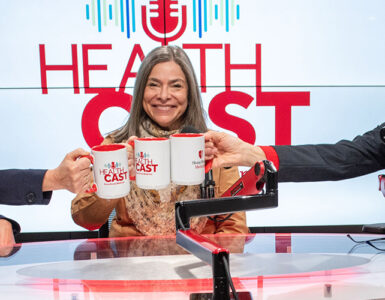


When it comes to your health, no topic is off-limits. Your primary care doctor has heard it all, and the questions you think are “too embarrassing” are often the most important ones to ask. In fact, those “awkward” topics like body odor and bathroom habits can reveal a lot about your overall health. If you’ve ever hesitated to bring up these concerns, don’t worry – our experts are here to answer your questions in a judgment-free zone.
The Experts
What You’ll Hear in This Episode
- 00:00 Opening and Introductions
- 1:40 Purpose and importance of annual physicals/preventative visits
- 3:00 Advocating for yourself
- 3:40 Patient-physician relationship
- 5:06 Screenings
- 7:30 Vaccinations
- 9:22 Annual Bloodwork
- 10:21 Supplements
- 13:44 Open dialogue with your physician
- 14:46 “Why do I have strong body odor even when I shower?”
- 16:09 “Why do I sweat so much?”
- 17:20 “Why do my feet smell bad?”
- 18:59 “What causes bad breath, even if a person brushes regularly?”
- 20:26 “How often should people have bowel movements?”
- 22:22 “Why does my urine feel or smell weird?”
- 23:31 “Is it normal to pee a little when I laugh or cough?”
- 24:50 The benefit of receiving care at an academic medical center
- 25:30 “Is waking up in the middle of the night to urinate a normal part of aging?”
- 26:19 “Is it normal to have gas all the time?”
- 26:59 “Why do I feel like I’m so bloated after eating anything?”
- 28:08 Closing Remarks
Full Podcast Transcript
00:00 Opening and Introductions
Description of Video Studio: News desk with Stony Brook Medicine logo on the front. A big screen is behind seated experts with the HEALTH Yeah! logo (red uppercase lettering with a microphone at the top of the “L”). Music plays as the announcer introduces the episode.
Announcer
Welcome to HEALTH Yeah!, where experts from Stony Brook Medicine come together to discuss topics ranging from the complex inner workings of an infectious disease to tips and tricks for staying safe and healthy all year long.
Timothy Brown
Hello and welcome to HEALTH Yeah! Your doctor should be your go-to source for all things health. But some questions are a little too awkward to ask sometimes. That’s why so many people turn to Google or chatbots for answers. The problem, though, not everything you read online is accurate. That’s where our experts come in.
We’re here to tackle those embarrassing questions head on. Today, we’ll start with some of the basics of adult primary care, then dive into the sometimes uncomfortable topics of body odor and bathroom habits.
Before we get started, I’d like to ask our first two experts to introduce themselves, and we’re going to start with Dr. Ghayalod, you’re here next to me, and then we’ll get to Dr. Van Arsdale. But if you can just introduce yourselves to our audience and tell us a little bit about what you do here at Stony Brook.
Nisha Ghayalod, MD
Yeah, so my name is Dr Nisha Ghayalod. I’m a board certified family medicine physician, where I did my residency at Stony Brook Southampton, and then did a fellowship in addiction medicine. So currently I work as both.
Daniel Van Arsdale, DO, MHA
My name is Dr. Van Arsdale. I’m the Director of Medical Education at Stony Brook Southampton and have been there for about 15 years, and I’m boarded in family medicine, hospice and palliative care medicine and neuromusculoskeletal medicine.
Timothy Brown
Perfect. And so you both did some time at Southampton, so I’m sure you worked together quite a bit.
Nisha Ghayalod, MD
Dr V. was my program director for the first year.
1:40 Purpose and Importance of Annual Physicals/Preventative Visits
Timothy Brown
That’s awesome. Well, Dr. Ghayalod, we’re going to start with you, and I just want to kind of talk about some of the basics first. And you know, a lot of times I hear people say, “Oh, you need to get your annual physical.” Can you talk a little bit about that and the importance of that?
Nisha Ghayalod, MD
Yeah, so the annual physical, or also known as a preventative visit, is kind of what the name says. It’s for you and your doctor to catch up on everything that’s going on and make sure we screen for anything that’s important, like cancers, your blood sugar, blood pressure, things like that. It’s important, because it gets us ahead of the game instead of catching up later in the future.
Preventative visits allow us to be able to check your blood pressure and make sure things like diabetes and high cholesterol aren’t brewing. Those are things that can lead to stroke, heart attack, a lot of complications in the future. So it’s easier, it’s better to catch it earlier rather than later.
Timothy Brown
You know, it’s interesting. I think a lot of times people don’t really think of this, but prevention is so much easier on you and for your physician than trying to fix something later down the road that might be more serious, and that’s really what you’re looking to do with people, right?
Nisha Ghayalod, MD
Absolutely, it’s a lot easier to help get you on the medications to treat your high blood pressure than to treat a stroke.
3:00 Advocating for Yourself
Timothy Brown
So I want to ask you a little bit about advocating, for how patients can advocate for themselves. Because I think sometimes people will be at home, they’ll think that something’s wrong. They’ll be at work, something happens, but they don’t necessarily, they don’t want to act like they’re a complainer or that sort of thing, but it’s good to really talk to your physician, open up, explain what’s going on, and really give them the background.
Nisha Ghayalod, MD
Yeah, definitely, it’s important. Something that seems very minor to you, like a twang in your chest or an upset stomach, can actually be something more serious. So you should definitely feel comfortable talking to your primary care about it, because, like I said, whatever seems small to you can be a bigger deal.
3:40 Patient-Physician Relationship
Timothy Brown
Dr. Van Arsdale, I’m kind of curious, you know, I think it’s interesting because I think there’s some generational things happening. I think younger patients tend to not have a primary care physician, maybe as much as older patients realize how important that is, and that relationship is really important, isn’t it?
Daniel Van Arsdale, DO, MHA
It is. It’s actually critical. In many ways, primary care is defined by a relationship, and your ability to partner with another person and understand them is huge in making any kind of change in someone’s life. So you know, we fool ourselves sometimes, thinking that our prescription pad is what’s most powerful. But the prescription pad is only as powerful as the relationship is strong.
And so with your primary care physician, a physician in particular, that relationship is key, and it’s the person you’ll spend most of your time with. So it’s really important actually.
Timothy Brown
You know, just from a personal experience, and unfortunately, not my primary care physician anymore because we live several states away now, but a primary care physician I had in the past, I developed a relationship with this gentleman, just a great guy, and he really knew me, because I remember talking to him one day, and he said, “There’s something wrong with you.” And he goes, “What’s what’s off about you?” We got into conversation, and he was very, very astute in his observation and helped me.
And you know, that’s the power, I think, of having that good, caring primary care physician. That person that you can connect with. It’s just so important to me.
Daniel Van Arsdale, DO, MHA
Yeah, absolutely.
5:06 Screenings
Timothy Brown
So tell me a little bit about some of the screenings that people see at different ages. And again, it’s important to do this on a yearly basis. What can people look for, and how important is it?
Daniel Van Arsdale, DO, MHA
Yeah, I mean, I think during the younger years, so 18 to 40, most of the stuff that we kind of look for, things that we screen for, are HIV, sexually acquired illnesses. Starting at 21 in women, we start screening for cervical cancer, so pap smears, things like this. Also during those time periods and other time periods, but certainly during those time periods, screening for depression, alcohol use, tobacco use, substance use, things like this.
I mean, that’s not all encompassing, but you kind of get a lifestyle picture during that time, and it informs you about possible risks and preventive things that you can do or interventions you want to take to prevent something from developing into something that requires something more aggressive.
Timothy Brown
So as you get a little older, when you reach that 40 year age mark and a little bit beyond, did the screenings change dramatically?
Daniel Van Arsdale, DO, MHA
Well, they change. Certainly. You know, at 40, generally speaking, women start getting mammographies and things like this. And at 45 now the recommendation is for people to get colorectal cancer screenings using a colonoscopy. There’s other things that you can do, but colonoscopy is the gold standard.
So those start, you know, between that 40 and 50 year timeframe.
Timothy Brown
Yeah, and then, of course, prostate screenings?
Daniel Van Arsdale, DO, MHA
Well, for older men, it’s really a shared decision making conversation, so you have to talk to your doctor about risk, symptoms, things like that. There’s not a hard and fast recommendation for screening for prostate cancer. But at much older ages, you know, you’ll screen for aortic aneurysms. And if you’ve been a longtime smoker, if you’ve been smoking for 30 years, you’re a current smoker, or you’ve quit within the past 15 years, they’ll do a low dose CAT scan of your lungs to see screen for lung cancer. So things change with time, but those are some of the basics for people.
7:30 Vaccinations
Timothy Brown
Let’s talk about vaccinations for a moment, because that’s been in the news a lot lately, and particularly for pediatric patients or children, but also for adults.
I just got my flu shot and my COVID shot about a week ago, relatively painless. I didn’t really have a sore arm, and I got them both in the same arm. But it’s important to do this, and so can you talk to us a little bit about that? What should people look for, and when should they get them?
Nisha Ghayalod, MD
Yeah, it depends on your risk factors, because some patients require vaccines that are normally for older patients. For example, pneumonia. We typically will give that to patients over the age of 50, but we find that patients who are undergoing treatment for cancer, have some sort of severe chronic illness like COPD or asthma, then we tend to give those vaccines earlier because they’re at higher risk of developing pneumonia.
HPV can now be given up to the age of 45 for both men and women. That was previously viewed as a vaccine that you would give when you were a lot younger. You can do the shingles vaccine, which is recommended at the age of 50, again, unless you have risk factors, like you’ve had shingles before at a younger age. I think that’s all the vaccines that you should be looking out for.
Timothy Brown
So I have a question about the flu vaccine in particular, because I always wait to get it. And some people, I know some people get it in September. I got mine in December because I always figure I’m most likely to get sick in January, February. Maybe that’s just me. Is that dumb? Am I just making this up as I’m going along?
Nisha Ghayalod, MD
No. I mean, everybody’s different. You kind of decide on your own. I mean, it’s potent enough to be able to cover you throughout the winter. So if I do get it in September, like I did, then you’ll be okay. But some people prefer to get it closer to the wintertime.
Timothy Brown
I’m going to be super flu resistant when January rolls around. Well anyway, so it’s a good idea to get it, and it’s a good idea to get the COVID vaccine too, as well, at the same time, right?
Nisha Ghayalod, MD
Yep, completely safe to get both of those.
9:22 Annual Bloodwork
Timothy Brown
Let’s talk about bloodwork a little bit because that’s one of the things that I know, depending on what I’m going to see my physician for, sometimes I’ll have a blood panel done.
What are they looking for? What are you guys looking for at that point?
Nisha Ghayalod, MD
So it also depends on your age and kind of your past medical history. Typically, what we’ll do at an annual physical is we’ll check to make sure you’re not anemic. We’ll make sure that your electrolytes are okay, kidneys are good, depending on if you’re over the age of 40 or if you’re under 40 with comorbidities, we’ll check an A1c to check if you’re diabetic. And we’ll also order a lipid panel, which will check your cholesterol, again, depending on your risk factors.
And if you have things like hypothyroidism or other issues like with the prostate or risk factors where you have a family member that’s been diagnosed with prostate cancer, we’ll tend to check that on your labs as well. If you do develop a further condition, we will check lab work there regularly.
10:21 Supplements
Timothy Brown
Can we talk about supplements for a minute? Because I hear about that all the time. You see that online, people are selling supplements. People are taking a variety of supplements. And I always kind of wonder how much of this is legitimate, and how much of this is somebody selling snake oil?
Daniel Van Arsdale, DO, MHA
Yeah. So I think it depends on the supplements, perhaps. But you know, if you look, you know, it’s unfortunate. If you look at our food supply, you know, the nutrient density of our food supply has gone down for years.
And you know, inherently, the food industry has known this because they fortify breakfast cereals. So, you know, we’re taking vitamins from the time that we’re quite young, actually. So I recommend people eat a well balanced whole foods diet. I mean, that’s really what you should be doing, trying to get your nutrients through your food.
But for folks who may need a little support, you know, I do recommend a multivitamin. If your vitamin D level is low, I’ll recommend taking a vitamin D supplement so that you have a normal vitamin D level so you prevent bone loss and other things. And calcium for people of a particular age, I support women taking calcium. So there are some supplements that I think are good and necessary for people to take as we get older, or if, for some reason, you can’t eat a well balanced diet for one reason or another, or are unable to absorb certain nutrients.
There are times that we give people vitamins through injection if they can’t absorb those vitamins. And so I think it’s an individual thing. There’s a market for every ailment. There’s a supplement for every problem. And so you should talk to your doctor about it.
Timothy Brown
Vitamin D is one of those things too. I’m kind of curious how often you see people that are deficient in that area. It seems like it’s more and more common.
Daniel Van Arsdale, DO, MHA
I see it a lot. A lot.
Timothy Brown
What do we think is causing that?
Daniel Van Arsdale, DO, MHA
We spend way too much time inside. I mean, human beings developed outside. For 50,000 years, we were running around without clothes on, and mostly not in areas where you needed clothes, and so sun exposure was not a problem. That’s where you get most of your vitamin D, through the sun.
But I would say, living in New York, you can’t get enough vitamin D from the sun from October through May. So you may need to get supplementation. You may.
Timothy Brown
Definitely worth asking your physician about. All right, I think we’re going to take a break right now. We’re going to come back and we’re going to ask some of those embarrassing questions that you might be a little bit touchy about asking a physician. We’ll ask those of a physician here in just a moment, you’ll get your answers.
And welcome back, we’re going to talk about some of the more embarrassing things that maybe you feel a little uncomfortable asking your physician, so I’m going to ask your physician today, and we’re so happy to have you here. Do you mind introducing yourself to our audience and telling us a little bit about what you do at Stony Brook Medicine?
Lucy Moussignac, MD
Yes. My name is Dr Lucy Moussignac. I’m a board certified family medicine physician. I practice in Sag Harbor, New York with the Stony Brook Meeting House Lane practices.
13:44 Open Dialogue With Your Physician
Timothy Brown
Okay. Dr. Moussignac, we talked a little bit in the intro about, you know, people sometimes I think are, I don’t know, maybe a little embarrassed to talk to their physician about some of these things, but they really shouldn’t be, because, as we spoke about this in the previous segment, I think it’s really important for people to develop a relationship with their their physician.
I don’t know if you want to expound on that, but to me, that’s just a critical thing.
Lucy Moussignac, MD
Absolutely. In day to day lives, people have symptoms that they’re not sure are normal, or as I like to call them, there could be common symptoms, but not necessarily normal symptoms, and they might be embarrassed to talk about it with their primary care physician, but I do encourage my patients speak to me about anything in your mind. When I do my annual physicals, I do start the annual physical with this question, what are your concerns?
So this way, I open the room for them to talk about anything that they think they want to talk about, whether it’s normal to them or not.
Timothy Brown
So that open dialog is just so important, and it’s just, you know, open up to your physicians. You guys have heard everything. So it’s nothing to be embarrassed about.
14:46 “Why Do I Have Strong Body Odor Even When I Shower?”
But we’re going to ask some of those questions now. So let’s start off. Let’s talk about odor, because that is something that people are concerned about sometimes, and sometimes people will ask, Why do I have strong body odor, even when I shower?
Lucy Moussignac, MD
So strong body odor could be a cause of certain things. Some people could have certain diets that cause them to have strong body odor, especially if they eat a lot of garlic, a lot of asparagus, a lot of onions, that could lead to that unwanted smell.
Also, it could be excess sweat glands. That’s just genetics. It’s a gift that you get from mom, dad, grandma, grandpa, and will have to be controlled more with some stronger deodorants or prescribed level deodorants. So the best way to find the cause of that unwanted symptom is to talk about diet, lifestyle and genetics.
Timothy Brown
I’d say that’s the beauty of talking because you can ask those smart questions and get to the bottom of it. You talked about a prescribed or prescription deodorant. What exactly is that? How does that vary from what you might buy at the store?
Lucy Moussignac, MD
So over the counter deodorants, they are aluminum ones. There’s also non aluminum ones. There are different percentages or strengths. Prescribed ones have a stronger strength of the aluminum or non aluminum deodorant, which could help mask the smell better.
16:09 “Why Do I Sweat So Much?”
Timothy Brown
Oh, fantastic. So we’ll kind of keep on that same line of questioning. Some people sweat excessively, and they wonder, you know, why do I sweat so much? Is it anxiety? Is it, as you mentioned, just that genetic thing that maybe they’re born with?
Lucy Moussignac, MD
It could be anxiety. Some people have general anxiety disorders, or they have a very stressful life at that moment in time. Sweat from anxiety is a body response to try to cool itself down. Women of a certain age could have it in perimenopause or menopause, and some people have genetics of desert caused them to have more sweat glands.
It could be treated with deodorant, and in very extreme cases, you guys can get Botox in the sweat glands to actually reduce the sweating.
Timothy Brown
I do know that, as you mentioned, women do often suffer from that, just from hot flashes, particularly if they’re going through menopause. What can be done for that?
Lucy Moussignac, MD
So there’s hormonal and non-hormonal treatments. Hormonal treatments will be estrogen and progesterone. Non-hormonal treatments will be from a class of medication called SSNRIs, and they help control the process in the brain that makes them feel hot and then has the reaction of sweating.
17:20 “Why Do My Feet Smell Bad?”
Timothy Brown
Yeah, so let’s talk about feet for a minute. Why do my feet smell bad?
Lucy Moussignac, MD
So I love this question because a lot of people get a little bit anxious, and it’s a very common symptom. I usually ask them, what’s your feet hygiene? How often do you change your socks? How often do you wash your feet in the shower? Do you have a fungal infection on your nails or on the soles of your feet? Do you have corns?
So those could lead to an unwanted smell in your feet, or you could just have a lot of sweat glands in your feet too. I always say, if you are a little bit cautious or worried aboout if it’s a genetic factor, ask your mom and dad – “Hey, do you have smelly feet?” You know, and you’d be surprised, a lot of them would say, hey, my mom said that she has smelly feet, and that’s why she wears thick socks. So that could be a cause.
Timothy Brown
So, I’m curious, you just touched on something right there. So you’re taking your shower. You got a lot of work to do up here on this end. And I think oftentimes when you get down south, it kind was like, I’m just getting out. So you need to be using some soap down there, maybe?
Lucy Moussignac, MD
Yes.
Timothy Brown
There we go. Remember that, all right, that’s good.
And there are some things you can do if you have issues with your feet, maybe being a little smelly. They’re things you can buy, and powders you can use.
Lucy Moussignac, MD
Powders, athlete flux powder is one. If you have a fungal nail, there could be a topical treatment or pills treatment as well. If there are bunions of corns, you could see a podiatrist and they could remove that for you.
18:59 “What Causes Bad Breath, Even if a Person Brushes Regularly?”
Timothy Brown
Perfect. Now here’s a big one, what causes bad breath, even if a person brushes regularly.
Lucy Moussignac, MD
So that could be a few things. One could be excess plaque. One of my series of questions I ask again on my annual is, when was the last time you saw a dentist? Because dental health is very, very important.
Doing your dental cleaning, they remove the plaque around your teeth, around your gums. It could be a gum infection as well. It could also be something called tonsil stones. So some people have large tonsils, and they have little pockets in it, and tonsil stones is a combination of bacteria and food particles, and they get stuck in the pockets of your tonsils, and it’s just staying there and building up. That could cause halitosis, which is the medical term for bad breath.
That could be removed with some water picks. On the soft level, I will say this again. On the soft level. If you’re doing the highest level, it could hurt quite a bit. Or it could be removed from your ENT physician or your dental team.
Timothy Brown
Perfect. You know it’s interesting because you mentioned gum disease, which can have impacts in other parts of your body eventually. So dental health really is important.
20:26 “How Often Should People Have Bowel Movements?”
Alright, so let’s shift gears just a bit. Let’s talk about going to the bathroom for a moment. This is an age old question, how often should people have bowel movements? Is that a daily thing, every other day? How often should it happen?
Lucy Moussignac, MD
It depends. You will hear people say you have to have a bowel movement once a day, twice a day. Generally, it depends on the person’s symptoms and diet. If someone feels they have to take laxative, MiraLAX to have a bowel movement, that’s not normal. We would say that you’re constipated.
Now, if you’re able to have a bowel movement and the stool, we’re going to talk about color and shape. If the stool is formed into a nice little home, brown in color, and it doesn’t hurt to have the bowel movement, and you don’t sit on the toilet for an extensive period of time to have the bowel movement, that’s normal.
Now let’s say you have to sit on the toilet for an extensive period of time, more than 10 minutes at a time, and the stool is hard, dark in color, little pellets form, that’s unnormal. Some people could have those forms of bowels regularly, and they think they’re going regularly when actually they don’t. So it’s not necessarily the frequency, it’s also the character of the bowels itself, and if it has changed, or if it’s concerning, then you might need a colonoscopy, which is one of our screening questions we ask on our annuals.
Timothy Brown
Interesting, you know, I also think, and we talked a little bit about this in the prior segment. When it comes to diet, you know, people don’t eat particularly well. I think it’s getting worse, it seems like it is. A lot of people eat fast food, that sort of thing, and that can cause issues with lack of fiber in the diet. And that will impact that, correct.
Lucy Moussignac, MD
Yes, absolutely. Lack of fiber, lack of protein, lack of water. A lot of people don’t hydrate very well. More people focus on sodas and coffee than actually drinking water. And that could really impact your bowel habits.
Timothy Brown
Interesting. So drink lots of water.
Lucy Moussignac, MD
Yes. Very important. And fiber.
22:22 “Why Does My Urine Feel or Smell Weird?”
Timothy Brown
So let’s talk about urine for a minute, because sometimes I think people will notice changes in their urine, either color or even odor.
Lucy Moussignac, MD
So when patients come to me and say, my urine feels weird or smells weird, the first thing I do is a urine analysis. I see if there’s an infection in the urine. If there is an infection, obviously we will treat it. Another cause could be you may not be hydrating well enough so you have really dark urine, and that could have a very unwanted, strong ammonia-like smell. So I also look at the urine during the urine analysis, how dark it is. Is it clear, or is it orange, basically. And then I will tell them you need to increase your hydration, and that could help.
If it does hurt, then it could be an infection, like I stated earlier, or you could have a chronic kidney stone that we don’t know about, and then that could be looked at with CT scans or ultrasounds. So just like bowels, urine could be a good indicator of what’s going on.
23:31 “Is it Normal to Pee a Little When I Laugh or Cough?”
Timothy Brown
Great. So again, these are questions that are being asked over Google, things that people are searching. So here’s one that I smiled a little bit when I saw. Is it normal to pee a little when I laugh or cough?
Lucy Moussignac, MD
That is a common problem, but not a normal problem. Okay, so what do I mean by this? A lot of people have that symptom, but it’s not necessarily a normal thing to have. So I’m going to presume that it’s mostly women that ask that question. The reason for that is usually women are the ones that ask me that concern.
If a woman had pregnancies, or even one pregnancy, or if they had a pelvic surgery, such as a hysterectomy, where the uterus is removed, or even men who have inguinal hernia repairs, all of that involves the pelvic muscle floor, and if that is compromised, it doesn’t hold the bladder as well.
So when we laugh, and we’re with our friends and family and we have a good old belly laugh, that pressure increases on our bladder and you get a little bit of leakage that could be treated with pelvic floor therapy. And Stony Brook has a great pelvic floor therapy team. You can also do Kegels, which is the most popular at home practices. It’s basically an exercise that strengthens the pelvic floor muscles.
24:50 The Benefit of Receiving Care at an Academic Medical Center
Timothy Brown
Right and the program here at Stony Brook, it’s, I think that’s kind of one of the powers of a big academic medical system. There are a lot of different areas where you know, if you have an issue, you may diagnose it, and you may suggest, oh, go over and see Doctor whatever, and they can help, and it’s kind of nice to be able to collaborate and help a patient that way.
Lucy Moussignac, MD
Oh yeah, absolutely. The great thing about being with such a large, well known academic center is because I have lots of colleagues, I have people I could call on, I could speak to them about a case, I could ask them questions about how to go about it with a particular patient. And we have a vast amount of specialties that are able and willing to help our patients.
25:30 “Is Waking Up in the Middle of the Night to Urinate a Normal Part of Aging?”
Timothy Brown
Yeah, that’s great. So as we get a little older, like me, sometimes you find yourself waking up in the middle of the night and you have to make a trip to the bathroom or two. Is that just a normal part of aging, or is there something else going on there?
Lucy Moussignac, MD
One to two times can be normal. It could be due to over hydration before bed. Some people sleep with a glass of water on their nightstand, and they drink the whole thing before they go to bed, and they wake up a few hours later needing to use the restroom.
However, if they need to use the restroom quite frequently at night, like three plus times, in men that could be a large prostate, which is blocking the complete urination process, and that could be treated with medications. In women, it could be the pelvic floor being weak at that time as well.
26:19 “Is it Normal to Have Gas All the Time?”
Timothy Brown
Perfect. Okay, so a couple of more questions for you. This is a good one. Is it normal to have gas all the time?
Lucy Moussignac, MD
That’s mostly a diet problem. If you eat a lot of spicy foods, a lot of actually, if you eat too much fiber, you could actually get a lot of gas as well. Now, if your diet hasn’t changed, and you’re having more gas, then we might need a colonoscopy. You might need an endoscopy as well. So it depends on if something has changed or if it hasn’t changed, meaning your eating habits and also your exercise habits as well.
26:59 “Why Do I Feel Like I’m So Bloated After Eating Anything?”
Timothy Brown
Final question, why do i feel like I’m so bloated after eating anything.
Lucy Moussignac, MD
So everybody gets a little bit bloated after eating, especially if you have a nice steak dinner, because your body is working to break down the foods. And to do that, it has to move the bowels and punch and munch it all up.
If it gets to the point where you are uncomfortable, you’re belching, you’re passing flatulence and it’s an excessive amount of time, then, again, we might have to go back to the GI option of colonoscopy or endoscopy. We might also need to give medication to help lower the amount of gas as well.
If it’s every once in a while, that’s okay. But if it’s constant, we also have to look at the diet as well to see if that’s the reason.
28:08 Closing Remarks
Timothy Brown
Fantastic. You know, I wasn’t embarrassed to ask any of those questions of you. You did a great job. I appreciate it. And it is important, I think it really is for people to develop that relationship with their physicians, and it helps them really kind of foster that communication, those lines of communication, and ask those questions, talk and really open up, which I think is critical.
Thank you so much.
Lucy Moussignac, MD
Thank you so very much.
Timothy Brown
That’s all the time we have today. Thank you to our experts for their time and expertise, and thank you to our viewers and listeners. If you found this conversation interesting, don’t forget to like and subscribe for more informative health related content, and keep an eye out for more episodes covering questions that you want answers to.
Announcer
Stony Brook Medicine is Long Island’s premier academic medical center. We transform lives through scientific discovery, education and care, and we bring together innovative research, advanced education and extraordinary health care expertise to set the standard for how healthy communities thrive. For more information, visit stonybrookmedicine.edu or follow us on social media.