

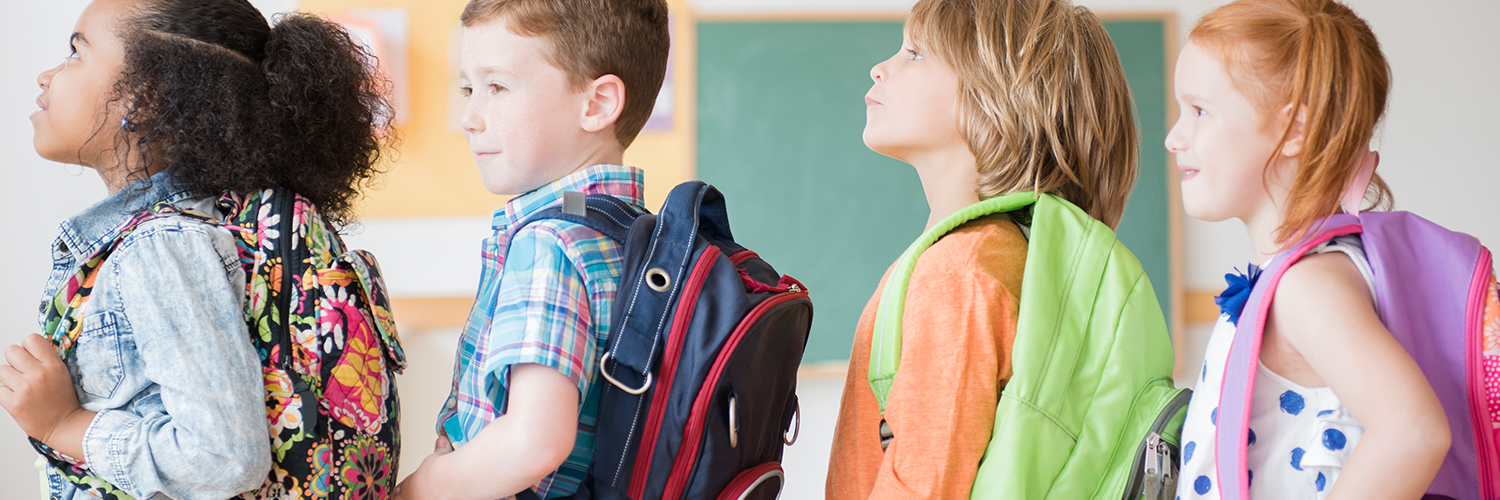
It’s a common sight: children heading to school with backpacks that look almost as big as they are. About 90 percent of U.S. children carry a backpack to school each day, and many exceed the safe, recommended weight. In one study, 96 percent of parents reported never checking their child’s backpack weight.
When bags are packed with books, laptops, lunchboxes and sports gear, the load adds up quickly. For growing children, carrying too much every day isn’t just uncomfortable—it can affect their orthopedic health, leading to back pain, fatigue and poor posture.
That’s why it’s essential for parents to understand what’s safe, what’s not, and how to help kids carry their backpacks in a way that protects their health.
Why Heavy Backpacks Are a Problem
Doctors and orthopedists are seeing more school-aged children with conditions linked to heavy or poorly fitted backpacks. While the occasional sore back after a long school day might not sound serious, repeated strain over months and years can create lasting problems.
Some of the most common issues caused by heavy backpacks include:
- Poor posture: Hunching forward to offset the weight
- Muscle strain: Ongoing soreness or fatigue in the back, shoulders or neck
- Joint stress: Added pressure on the hips and knees, which can sometimes become swollen and tender
- Redness of the skin: Irritation and redness from the bag rubbing against the skin
A child’s musculoskeletal system—which includes their bones, joints and muscles—is still developing well into their teenage years. Carrying a backpack that’s too heavy or worn incorrectly forces kids’ bodies to adjust in ways that can put stress on their spine and hips.
Children often lean forward to balance the load of a heavy backpack, which can lead to rounded shoulders and misalignment in the spine. Over time, this posture strain can potentially contribute to chronic back or neck problems.
In addition to causing postural problems, heavy backpacks place direct stress on certain muscles and joints. Kids might complain of sore shoulders, tight necks or achy lower backs when carrying too much weight in their bags.
Because a heavy backpack shifts balance, children are also more likely to trip, fall or strain themselves when rushing between classes or up stairs if their bags are heavy.
Signs Your Child’s Backpack Is Too Heavy
There are clear warning signs that a backpack may be too heavy for a child. If your child shows these signs regularly, it’s time to make changes:
- Frequent complaints of back, shoulder or neck pain
- Red marks or indentations on the shoulders from the straps
- Trouble lifting the bag or leaning forward to carry it
- Difficulty walking naturally or keeping balance with the backpack on
How to Prevent Backpack-Related Issues
Fortunately, preventing backpack strain is straightforward. With a little planning, parents can help their children carry their school supplies safely. Here’s what to do:
- Choose the right backpack: Pick one that’s lightweight, has wide padded straps, and includes multiple compartments, which helps distribute the weight. Waist or chest straps can also help disperse the weight more evenly.
- Check the weight: A safe guideline is that a backpack should not weigh more than 10 percent of a child’s body weight. For example, a 90 pound child shouldn’t carry more than 9 or 10 pounds in their bag, and a smaller child who weighs 45 pounds should carry no more than 5 or 6 pounds.
- Teach proper use: Children should always wear both straps, and the backpack should sit snugly against their back, not sagging below their waistline.
- Pack smart: Place heavier items like textbooks close to the back and encourage kids to only carry what they really need each day. If lockers or cubbies are available, they can leave some heavy items at school.
- Stay active: Playing and moving every day helps keep kids’ muscles strong and their backs healthy. Riding bikes, climbing on the playground, swimming, or even just running around outside all help build strength and support good posture for carrying a backpack.
Daily Backpack Safety Checklist for Parents
Before your child heads out the door, run through this simple checklist:
- Weigh it: Is the backpack less than 10-15 percent of your child’s body weight?
- Check the straps: Are both shoulder straps being used and adjusted snugly?
- Make sure the position is comfortable: Does the backpack sit high on the back, not sagging below the waistline?
- Remove items that aren’t needed: Are heavier items (like textbooks) needed, and if so, are they placed closest to the back?
- Look for strain: Does your child walk naturally, without leaning forward or struggling to lift the bag?
- Do a skin check: Are there any red marks on the shoulders after wearing the backpack?
- Ask them directly: Does your child complain of back, shoulder or neck pain?
When to Seek Help
Not all aches are harmless “growing pains.” If your child has persistent back, neck or shoulder discomfort, or if you notice visible changes in their posture, it’s worth checking in with a pediatrician or orthopedic specialist. Tingling, numbness, or weakness in the arms or hands is another red flag that should not be ignored.
Getting help early can prevent backpack-related pain from turning into longer-term orthopedic problems. Stony Brook Medicine’s pediatric orthopedic specialists are here to help families keep kids healthy and pain-free. The Division of Pediatric Orthopaedic Surgery at Stony Brook Children’s is the premier resource for children in Suffolk County with orthopedic (bone) issues. If your child is struggling with back pain or posture issues from heavy backpacks, schedule a consultation by calling (631) 444-KIDS (5437).