

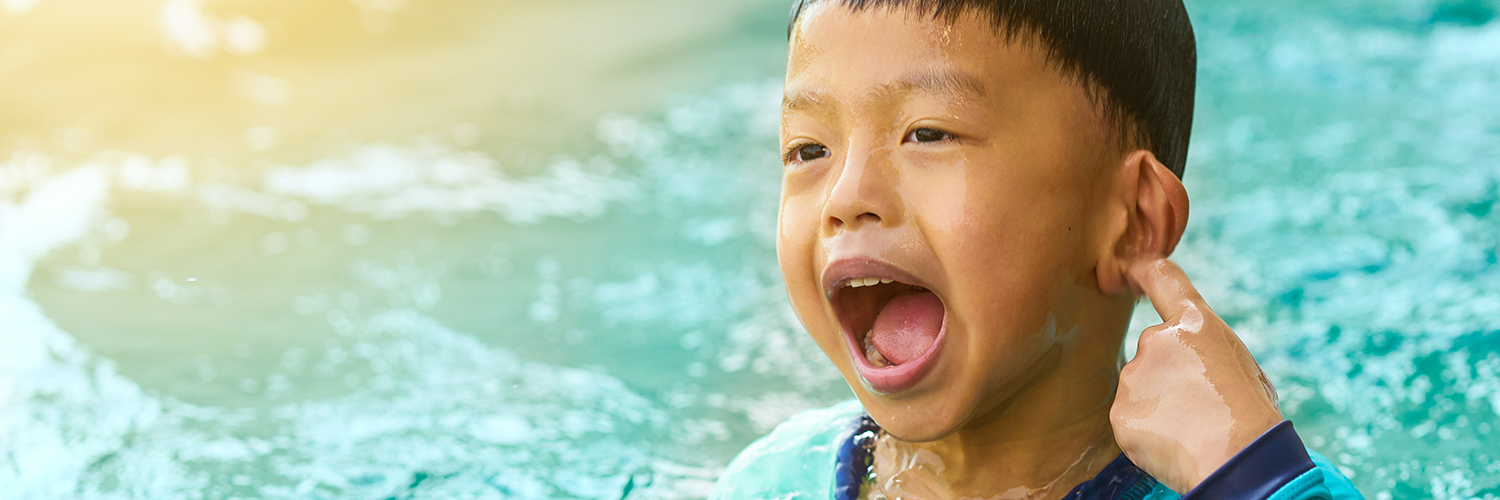
Summer brings pool parties, beach days, and plenty of swimming and water fun, but it also means a rise in swimmers’ ear, especially in children.
While ear infections are common, swimmer’s ear can be painful and can keep coming back if the underlying causes aren’t addressed. With a little knowledge, parents can learn how to spot, treat and prevent swimmers’ ear to help their kids enjoy a pain-free summer.
What Is Swimmer’s Ear?
Swimmer’s ear (also known as otitis externa) is an infection of the outer ear canal, which is the tube that connects the outside of the ear to the eardrum.
This condition is called “swimmer’s ear” because it’s often caused by water getting trapped in the ear. When this happens, it creates a moist environment where bacteria, and less often fungi, can grow inside the ear, causing an infection.
Unlike a middle ear infection (which occurs behind the eardrum), swimmer’s ear affects the outer ear and can happen even if your child hasn’t been sick.
This type of ear infection is not contagious and can affect people of all ages, although it’s more common in children and teens—especially those between 7 and 14 years old—because they have smaller and more narrow ear canals that trap water more easily and they tend to spend more time swimming under the water.
What Are the Symptoms of Swimmer’s Ear in Kids?
Watch for these signs and symptoms that can indicate swimmer’s ear in your child:
- Ear pain, especially when touching or tugging the ear
- Itchiness in or around the ear canal
- Redness or swelling of the outer ear
- Drainage from the ear (clear, yellow or pus-like)
- A feeling of fullness or “blocked” hearing, which is usually temporary
- In more serious cases, swollen lymph nodes around the ear or a low fever
How Does Swimmer’s Ear Happen?
About 10 percent of people will develop swimmer’s ear at some point in their lives.
Swimmer’s ear usually starts when water remains in the ear after swimming outdoors or bathing and dunking the head under water. This excess moisture irritates the skin inside the ear canal, which can allow bacteria or fungi to enter, especially if there are small scratches from cotton swabs, fingernails or earbuds.
Swimming in chlorinated pools, lakes and oceans can all cause swimmers’ ear, especially during long or frequent swim sessions.
Some children are more susceptible to developing swimmer’s ear, such as those with eczema, seborrheic dermatitis, allergies or injuries inside the ears.
What to Do If There’s Water in Your Child’s Ear
If your child says their ear feels full or they “hear sloshing” after swimming, try these tips to safely remove the water:
- Have your child tilt their head to the side and gently tug on the earlobe.
- Try having them jump up and down with the affected ear tilted down, which makes it easier for water to run out.
- Use a soft towel to dry around the ear, but don’t insert anything inside the ear. Avoid using cotton swabs in the ears, which can push water deeper and increase the risk of irritation and infection.
- Use over-the-counter drying drops (unless your child has ear tubes, a perforated eardrum or another ear condition. If they do, always check with your doctor first).
- Have your child avoid swimming for several days to help the inside of the ear dry. They can still shower, but should try to keep water out of the ears and dry them after.
What Are the Risks of Leaving Water in the Ear?
Leaving water in your child’s ears can lead to:
- Outer ear infections like swimmer’s ear
- Hearing issues from swelling or blockage
- Pain, inflammation and drainage that may require prescription treatment
The longer water stays trapped inside the ear, the higher the chance that bacteria or fungi will grow. That’s why prevention and early action are important if you suspect your child (or you) has water stuck inside their ear.
Children with diabetes or a weakened immune system may be more at risk for complications resulting from an ear infection and should always be evaluated promptly if symptoms appear. In these cases, a swimmer’s ear infection can spread to nearby tissue and potentially lead to more serious health issues.
When to See a Doctor for Swimmer’s Ear
Early treatment for swimmer’s ear usually brings relief within a few days. In about 90 percent of cases, symptoms go away within about 10 days when the infection is treated.
Call your child’s pediatrician if:
- Ear pain lasts more than a day or two, especially if taking antibiotics
- You see pus or fluid draining from the ear
- Your child has a fever, hearing loss or swollen glands
- Over-the-counter drops or home care don’t improve symptoms within a few days
Swimmer’s ear is usually treated with:
- Prescription antibiotic ear drops for five to seven days
- Pain medications like ibuprofen to reduce pain and swelling
- In some cases, antifungal medication or oral antibiotics if the infection is more widespread
If your child has ear pain or signs of swimmer’s ear, our Stony Brook Children’s Hospital pediatricians are here to help. We offer expert care for common conditions and same-day appointments when needed. A little ear pain shouldn’t ruin your child’s summer—let us help you keep their ears healthy and their smiles big. Learn more or schedule a visit here: Stony Brook Children’s Primary Care.